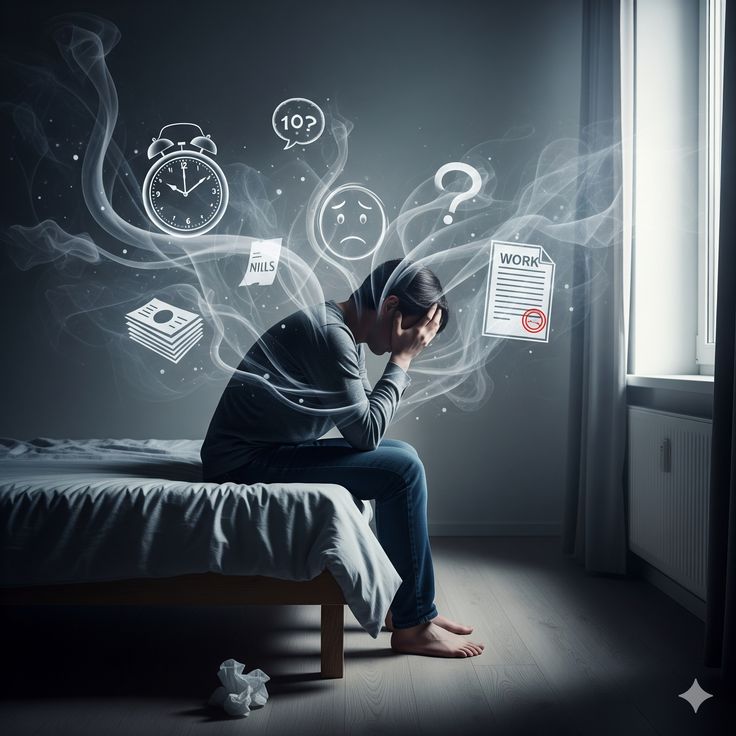
Why ADHD in Adults Often Goes Unnoticed Until Career, Relationships, and Emotional Stability Start Suffering
Siddharth always believed he was simply “bad at managing life.”
No matter how hard he tried, he constantly struggled to stay organized. He forgot important meetings, delayed tasks until the last moment, lost focus during conversations, and often felt mentally overwhelmed by responsibilities that seemed easy for other people to handle.
At work, he performed well during high-pressure situations but struggled with consistency. Some days, he worked with intense focus for hours. On other days, even replying to emails felt mentally exhausting. His unfinished tasks kept piling up, deadlines became stressful, and he constantly felt guilty for not functioning the way others expected him to.
How ADHD Quietly Affects Personal Relationships
His personal relationships also started becoming affected.
He interrupted conversations unintentionally, forgot important dates, struggled to manage emotions calmly during stressful situations, and often appeared distracted even while spending time with people he genuinely cared about.
Slowly, frustration started affecting his confidence.
For years, Siddharth blamed himself for being careless, lazy, emotionally unstable, or irresponsible without realizing he might actually be struggling with undiagnosed ADHD as an adult.
Why Adult ADHD Often Goes Unnoticed
Situations like this are becoming increasingly common today.
Many adults continue living with Attention-Deficit/Hyperactivity Disorder without recognizing it because ADHD is still widely misunderstood as something that only affects children.
In reality, ADHD often continues into adulthood and may gradually affect career growth, emotional wellbeing, relationships, confidence, time management, concentration, and overall daily functioning when left untreated for long periods.
ADHD Symptoms Do Not Always Look Like Hyperactivity
One of the biggest reasons adult ADHD often goes unnoticed is because symptoms do not always appear as obvious hyperactivity.
Many adults with ADHD become highly skilled at masking their struggles externally.
They may appear intelligent, creative, energetic, ambitious, or professionally successful while internally struggling with chronic distraction, impulsive decisions, emotional overwhelm, forgetfulness, poor organization, restlessness, procrastination, overthinking, and mental exhaustion almost every day.
The Emotional Impact of Untreated ADHD
Over time, these struggles begin affecting emotional stability deeply.
Adults with untreated ADHD often experience frustration because they repeatedly fail to meet expectations despite trying hard internally. Many develop low confidence, anxiety, emotional burnout, stress-related exhaustion, relationship difficulties, or depressive symptoms after years of feeling misunderstood or constantly criticized.
How Modern Lifestyle Patterns Make ADHD Harder to Manage
Modern lifestyles are also making ADHD symptoms more difficult to manage today.
Digital overload, constant notifications, multitasking pressure, irregular routines, work stress, sleep disruption, social media overstimulation, and performance expectations are continuously affecting attention span and emotional regulation, especially in individuals already struggling with ADHD-related difficulties.
Career Challenges Faced by Adults With ADHD
Career-related stress is often one of the first major warning signs.
Many adults with ADHD struggle with time management, task prioritization, consistency, organization, concentration during meetings, completing long-term projects, handling repetitive work, or maintaining structured routines despite being highly capable intellectually.
Some individuals constantly switch jobs because they feel mentally overwhelmed.
Others become emotionally exhausted trying to “keep up” with responsibilities while secretly struggling internally every day.
How ADHD Can Affect Relationships and Communication
Relationships also become deeply affected when ADHD remains undiagnosed for too long.
Partners may misunderstand forgetfulness, emotional impulsiveness, distraction, poor communication, or inconsistent behavior as lack of care or emotional immaturity. Over time, repeated misunderstandings often affect emotional connection, patience, communication, and relationship stability.
Many adults with ADHD also experience emotional regulation difficulties.
Small stressors may feel emotionally overwhelming, frustration may increase quickly, overthinking becomes common, and emotional reactions often feel difficult to control calmly during pressure-filled situations.
ADHD Is Not Laziness or Lack of Discipline
This is why adult ADHD should never be dismissed simply as laziness, carelessness, poor discipline, or personality flaws.
ADHD is a neurodevelopmental condition that affects how the brain manages attention, impulse control, emotional regulation, planning, organization, and mental processing.
At Cognivia Psychiatry, adult mental healthcare focuses heavily on understanding attention-related struggles, emotional regulation difficulties, lifestyle challenges, work-related stress patterns, relationship difficulties, and psychological wellbeing affecting each individual rather than simply treating symptoms superficially.
Modern Treatment Approaches for Adult ADHD
Modern ADHD management today focuses on compassionate understanding, emotional safety, psychotherapy, behavioral guidance, structured coping strategies, evidence-based treatment, and personalized care designed according to each individual’s emotional, professional, and psychological needs.
Depending on the condition, treatment may include psychotherapy, Cognitive Behavioral Therapy (CBT), attention management strategies, emotional counselling, stress management support, behavioral therapy, routine structuring, emotional regulation techniques, or personalized psychiatric care focused on improving focus, emotional balance, confidence, and overall daily functioning.
Compassionate ADHD Support at Cognivia Psychiatry
At Cognivia Psychiatry, individuals receive compassionate neuropsychiatric and emotional wellness care guided by Dr. Neha Gupta Giri, who has more than 12 years of experience and has treated over 10,000 patients across Pune and PCMC.
Dr. Neha Gupta Giri is known for her calm, emotionally understanding, and personalized treatment approach focused on helping individuals feel emotionally safe, mentally supported, and gradually more confident throughout their recovery journey.
For many adults, healing begins when they stop blaming themselves for struggles they never fully understood earlier.
Adults With ADHD Are Often Highly Capable Individuals
Adults with ADHD are often intelligent, creative, emotionally sensitive, and highly capable individuals who simply process attention, emotions, routines, and mental stimulation differently.
Recovery and improvement do not happen through self-criticism alone.
They happen through understanding, structured support, emotional awareness, healthy coping strategies, therapy guidance, and helping individuals gradually learn how to manage attention, emotions, and daily responsibilities in healthier ways.
Why Early Diagnosis and Support Matter
Ignoring adult ADHD symptoms for too long may eventually affect far more than productivity alone.
Untreated ADHD can gradually affect emotional wellbeing, confidence, career stability, relationships, communication, mental health, decision-making ability, and overall quality of life. Many individuals later realize that struggles they once blamed on themselves were actually signs that they needed understanding and professional support much earlier.
Seeking help for ADHD is not weakness.
Sometimes, it is the first step toward finally understanding yourself more clearly and living with less emotional exhaustion.
Conclusion
Persistent distraction, emotional impulsiveness, forgetfulness, poor focus, overthinking, disorganization, and emotional overwhelm in adults should never be repeatedly dismissed simply as personality flaws or lack of discipline. Undiagnosed ADHD can gradually affect emotional wellbeing, confidence, career growth, relationships, communication, and overall quality of life when left untreated for too long.
Modern adult mental healthcare now focuses heavily on compassionate understanding, emotional safety, psychotherapy, behavioral support, structured recovery planning, stress management, and long-term emotional wellbeing designed around each individual’s psychological and lifestyle needs.
At Cognivia Psychiatry Official Website, individuals receive compassionate neuropsychiatric and emotional wellness care supported by evidence-based psychiatry, personalized counselling, modern therapy approaches, and recovery-focused mental healthcare.
Dr. Neha Gupta Giri
Consultant Neuropsychiatrist
Cognivia Psychiatry
Pimple Saudagar, Pune 411017
Phone Number: +91-9156999844
Website: www.drnehagupta.com
.
Recent Posts
-
 Why Alcohol and Nicotine Addiction Often Begin as Emotional Escape Mechanisms During Stressful Phases of Life
 -
 Still Confusing ADHD with Poor Discipline While Attention Disorders Continue Impacting Children’s Development
 -
 Why ADHD in Adults Often Goes Unnoticed Until Career, Relationships, and Emotional Stability Start Suffering
 -
 Struggling to Handle Teen Mood Swings and Attention Problems While Emotional Health Continues Getting Affected
 -
 Why Many Intelligent Children Continue Struggling in School Due to Undiagnosed Attention and Focus Disorders